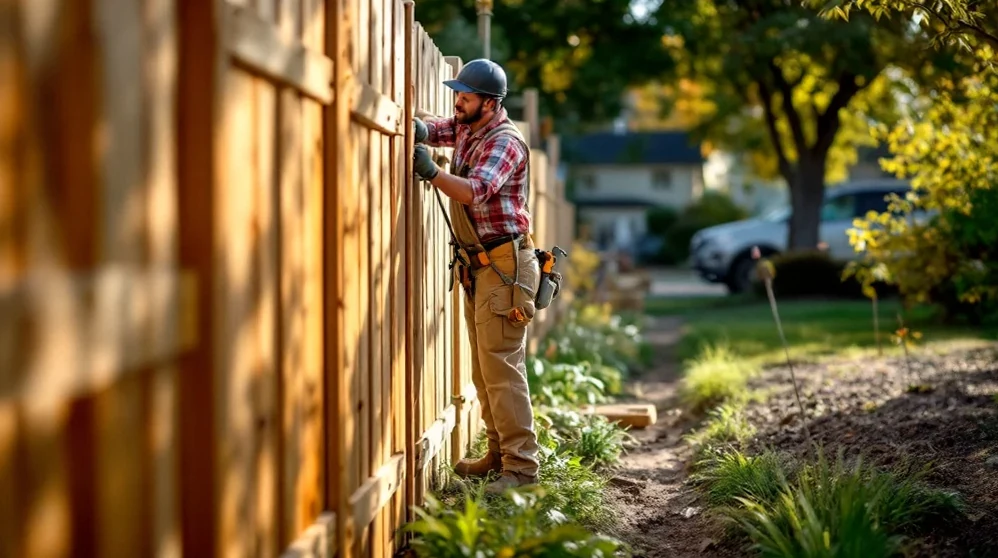
What is Fence Installation and how does it work?
Fence installation is the process of setting posts, attaching rails and panels, and securing gates to create a boundary around your property. It starts with a site visit, then digging holes, pouring concrete, and building the fence itself.
When we talk about fence installation, we're not just talking about hammering boards together. It's a sequence of steps that begins with marking utility lines and ends with a gate that swings true. Most homeowners don't see the groundwork, but that's where a fence stands or falls.
For a typical 150-foot wood fence, the whole job usually takes two to three days with a crew of two or three. (getfencefind.com) That includes setting posts, letting concrete cure, and attaching pickets. If you're adding a gate or working on a slope, add a day.
The cost range in Huntsville sits between $1,275 and $7,650, which is wide because it covers everything from a small chain-link run to a full privacy fence with gates. (getfencefind.com) Your exact number depends on linear feet, material choice, and how much prep your yard needs.
- Site visit and measurements come first
- Utility lines get marked before any digging
- Posts go in concrete, then rails and pickets
- Gates and latches get aligned and tested
Short version
- Expect a site visit, then 2 to 3 days of work for a typical yard
- Costs run $1,275 to $7,650 in Huntsville, depending on size and material
- Permits and utility locates happen before the first hole is dug
- A good fence starts with posts set below the frost line
How Fence Installation works, start to finish
A fence installation follows a clear sequence: you get a quote, we mark utilities, dig post holes, set posts in concrete, attach rails and pickets, then hang gates. Each step has a purpose, and leaving any out leads to trouble later.
It starts with a phone call and a site visit. We walk your property line, check for slopes, look for roots and rocks, and talk about what you want. That's when we give you a number we stand behind, not a guess. Some companies quote over the phone, but that misses too much. A fence that looks straight on a flat yard can be a nightmare on a hill.
Once you approve the quote, we handle the paperwork. In Huntsville, you'll need a permit for most fences over a certain height, and we pull that for you. We also call 811 to get utility lines marked. That's non-negotiable. Hitting a gas line isn't just costly, it's dangerous.
The digging starts after everything's marked. Post holes go down about 24 to 30 inches, depending on frost depth. We set each post in concrete, check it with a level, and brace it so it stays plumb while the concrete cures. That usually takes overnight.
With posts set, we attach horizontal rails, then pickets or panels. For wood fences, we leave a small gap between pickets so they can expand and contract with humidity. For vinyl or aluminum, we follow the manufacturer's spacing. Finally, we hang gates, adjust the latches, and walk the whole line to check for gaps or wobble.
One thing that surprises homeowners: the cleanup. We haul away old fence material, dig out leftover concrete, and rake the dirt smooth. Some outfits blow through the job and leave you with a mess. Our crew leaves the yard as clean as we found it, minus the old fence.
- Site visit and quote.We measure, check the ground, and give you a firm price. No surprises later.
- Permits and utility locates.We pull the permit and call 811 so no one hits a buried line.
- Post holes and concrete.Holes go deep, posts go in plumb, and concrete gets a day to cure.
- Rails, pickets, and gates.We attach everything, then adjust gates so they swing and latch cleanly.
- Final walkthrough.We check every section, tighten hardware, and clean up the site.
Why Fence Installation matters for your home
A fence does more than mark a boundary. It keeps kids and pets in, gives you privacy, and adds curb appeal. Done right, it lasts decades. Done wrong, it's a constant headache of leaning posts and sagging gates.
Think about what a fence does for a Huntsville home. It defines your yard, which matters when neighbors are close. It gives your dog a safe run. It blocks the view from the street. And when you go to sell, a solid fence is a feature buyers notice. A crooked, rotting fence is a red flag.
The quality of the installation is what separates a fence that looks good for twenty years from one that needs repairs in five. Posts set too shallow will heave in the winter. Pickets nailed too tight will warp in the summer humidity. Gates hung without proper bracing will drag on the ground. These aren't material failures, they're installation failures.
In Huntsville, the clay soil and hot summers put extra stress on fences. Clay expands when wet and shrinks when dry, which can shift posts if they're not set deep enough. A crew that knows local soil conditions will set posts accordingly, using more concrete or deeper holes where needed.
There's also the matter of property lines. A fence built a foot onto your neighbor's land can cause a dispute that ends in court. We use property stakes and, when there's doubt, suggest a survey. It's a small cost compared to moving a fence later.
A fence is only as good as the posts it stands on.
Common problems and what causes them
Most fence problems trace back to poor installation: posts that aren't deep enough, concrete that isn't mixed right, or pickets attached too tightly. Knowing what goes wrong helps you spot it early and avoid it from the start.
Leaning posts are the most common issue we see. That happens when posts aren't set below the frost line or the concrete isn't mixed properly. In Huntsville, frost depth is shallow, but clay soil still moves. If a post leans after a few years, it was probably set too high or the hole wasn't wide enough at the bottom.
Sagging gates are another frequent complaint. Gates are heavy, and the hinges take a lot of stress. If the gate post isn't buried deep or the frame isn't braced, the gate will drop. We always set gate posts deeper and use heavier hardware, but not every crew does.
Rot and decay show up at the base of wood posts, especially if they're set directly in concrete with no drainage. Water pools around the post and seeps into the wood. Using pressure-treated lumber and sloping the concrete away from the post helps, but some rot is inevitable over time. That's why we recommend setting posts in gravel or using metal post anchors for longer life.
Gaps between pickets can appear as wood dries and shrinks. That's normal, but it can be minimized by using properly seasoned lumber and leaving a slight gap during installation. We also see pickets that warp or cup because they were nailed too tightly, leaving no room for expansion.
Finally, there's the issue of gates that won't latch. Often that's a sign of a post that has shifted. It can also be a latch that's installed crooked. We check alignment on every visit, but if you notice a gate sticking, catch it early before the hinges bend.
Small gap under a gate
A little settling is normal, but if it grows, the post may be shifting.
Pickets that warp or cup
Moisture is getting in. Replace them before they split.
Leaning post or sagging gate
Call us. Waiting makes the fix bigger and more expensive.
Sources
Need fence installation in Huntsville? Get a free estimate today.
📞 256-695-4525