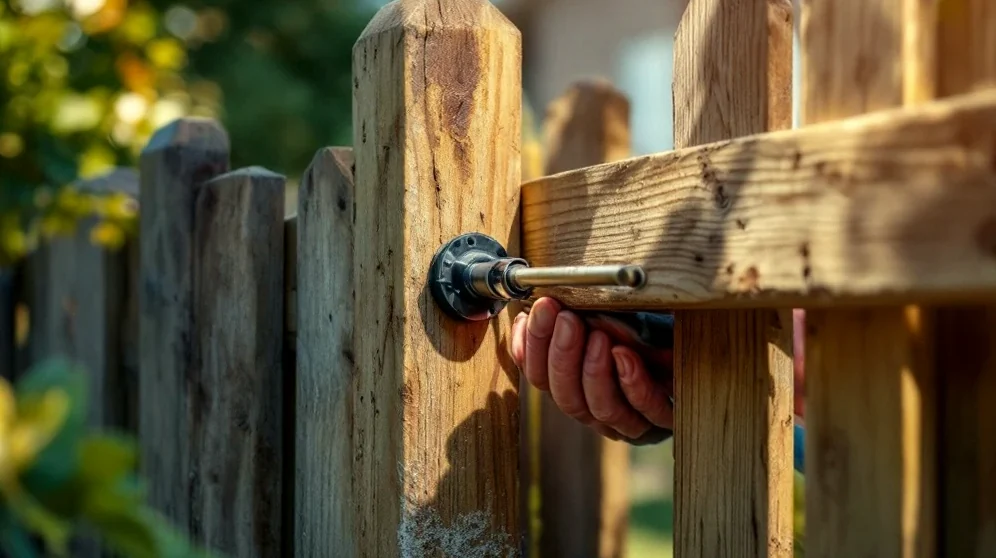
What is Fence Repair & Post Replacement and how does it work?
It is fixing the parts of a fence that failed without tearing down the whole run. That usually means pulling one or more rotted posts out of the ground, setting new ones in concrete, and reattaching the panels, rails, and pickets that are still sound. Single-post repair runs $180 to $280 including materials and labor. (rocketcityfence.co)
Most fences don't fail all at once. One post rots at the ground line, the panel above it sags, and the gate starts dragging. A homeowner looks at the whole fence and figures it needs replacing. It usually doesn't. If the rails and pickets are still solid, we can swap the bad post and the fence goes back to standing straight for a fraction of what a new run costs.
The work is more involved than it sounds because the post is the hard part. Everything above ground is easy to cut and bolt. The buried section is where the problem lives, and that's where the shovel, the breaker bar, and the concrete come in.
Post replacement in Huntsville runs $200 to $600 depending on post size, depth, and how much concrete has to come out. (huntsvillefences.com) Small repairs like a single post or gate hardware typically land between $150 and $400. (rocketcityfence.co) For context, a full new fence in this area averages $1,275 to $7,650. (getfencefind.com)
- One or two bad posts: repair almost always beats replacement
- Rotted rails across a whole run: replacement usually makes more sense
- Leaning gate plus a soft post: repair the post first, then rehang the gate
- Storm damage to a single section: repair, then match the stain or paint
Short version
- A single post repair runs $180 to $280 with materials and labor. (rocketcityfence.co)
- Post replacement in Huntsville ranges from $200 to $600. (huntsvillefences.com)
- Gate repair or replacement runs $300 to $1,200. (huntsvillefences.com)
- Wood posts rot from the inside out, so the failure is usually below the soil line.
How Fence Repair & Post Replacement works, start to finish
We dig out the old post, break up the concrete collar around it, set a new pressure-treated post in fresh concrete below the frost line, and reattach the existing panels. A single post takes two to four hours. Multiple posts or a gate rebuild can stretch to a full day.
The first step is figuring out which posts are bad. A post can look fine above ground and be hollow six inches down. We probe the base of each post with a screwdriver. If it sinks in easily, the wood is gone and the post needs to come out. If it's firm, we leave it alone. This is the step homeowners leave out when they try to fix a leaning fence by adding braces and brackets to the top.
Pulling a post is the slow part. There's a concrete collar around the base of most posts, and it doesn't want to move. We dig a hole wide enough to get a bar under the concrete, break it loose, and lift the post and concrete out together. If the post was set in dirt with no concrete, it comes out faster but the hole is wider. Either way, the hole gets cleaned out and squared up before anything new goes in.
Setting the new post is where the job is won or lost. We use pressure-treated pine rated for ground contact, set 24 to 30 inches deep, with a concrete mix poured around the base. The concrete isn't there to hold the post up. It's there to keep water from pooling against the wood and to keep the post from shifting when the ground moves. A post set in loose dirt will lean again the first time we get a wet winter.
Once the concrete sets, we reattach the rails and panels. If the old rails were screwed into the post, we reuse the same holes when we can. If the rail ends are split or soft, we cut them back and sister on a short replacement piece. Then we check the gate. A gate that was dragging before the repair usually hangs straight once the post behind it is solid again.
Weather matters more than people expect. Concrete needs to cure before the fence takes any load, so we don't hang a heavy gate on a new post the same day. In summer we'll come back the next morning. In a cold snap, we wait longer. That's a scheduling detail, not a shortcut.
- Probe every post.A screwdriver pushed into the base of the post tells you which ones are soft. Do this before you assume the fence is done.
- Dig and break out the old concrete.The post and its concrete collar come out together. This is the part that takes the longest.
- Set the new post in concrete.Pressure-treated ground-contact lumber, 24 to 30 inches deep, with a concrete collar poured around the base.
- Reattach rails, panels, and gate.Reuse existing holes where possible. Replace split rail ends. Rehang the gate once the concrete has cured.
Why Fence Repair & Post Replacement matters for your home
A failed post doesn't just make the fence look bad. It lets the whole run lean, which pulls the next post over, and the next one after that. Fixing one post early keeps the fence standing for years. Ignoring it usually means replacing three or four posts instead of one.
Huntsville's soil is the main reason this matters here. We have heavy clay that swells when it's wet and shrinks when it's dry. That movement works on fence posts all year. A post that was set perfectly straight in April can be leaning by October, and the movement opens small gaps around the base where water gets in. Once water is sitting against the wood, rot starts.
The second reason is our summers. Long stretches of heat and humidity keep the ground around a post damp far longer than homeowners expect. Wood that stays wet rots. Pressure-treated pine holds up well, but it doesn't last forever, especially when the cut end of the post is sitting in a puddle of clay.
There's also a safety angle that gets overlooked. A fence with a leaning post and a sagging gate is a fence that can fall on a kid or a dog. We've pulled panels off posts that were barely holding on. The homeowner had no idea the post was hollow until we showed them the inside of it.
And there's the neighbor question. In a lot of Huntsville neighborhoods, the fence sits on a property line. A leaning fence that starts to encroach on the neighbor's yard creates a conversation nobody wants to have. Repairing the post before the fence shifts keeps that from becoming an issue.
Post feels soft at the base
A screwdriver sinks in easily. The post is on its way out. Get it on the schedule before it fails completely.
Fence panel is leaning
The post has lost its grip in the ground. Repair within a few weeks or the adjacent posts will start to lean too.
Gate is dragging or won't latch
The gate post is usually the first to go because it carries the most weight. Fix it before the gate falls off its hinges.
Common problems and what causes them
Rotted post bases, heaved posts from clay soil, split rails at the fasteners, and sagging gates are the four calls we get most. Each one has a different cause, and the fix is different too. Knowing which one you're looking at tells you whether it's a $180 repair or a $600 one.
<p>That failure almost always starts down low. The rot begins at the ground line, where the wood stays wet the longest. Pressure-treated pine is rated for ground contact, but the treatment doesn't always penetrate all the way to the center of a 4x4. Once water gets into the center, the post rots from the inside. You can't see it from the outside until the post fails.</p>
Heaved posts come from our clay soil. When the ground freezes and thaws in a cold snap, or when it swells after a heavy rain, the post gets pushed up out of the ground. The fence panel goes with it. This is common along fence lines that run through low spots where water collects. A post that's heaved can sometimes be reset, but if the concrete collar is broken, it needs to come out.
Split rails happen at the fasteners. A screw or nail driven into the end of a rail creates a weak point. Over time, the wood around the fastener cracks, and the rail pulls away from the post. This is more common on older fences where the rails were nailed instead of screwed. The fix is to cut the split end off and sister on a new piece, or replace the rail.
Sagging gates are usually a post problem, not a gate problem. The gate post carries the weight of the gate plus the use of the gate swinging open. When the post gets soft at the base, the gate drops. Homeowners often try to fix this by adjusting the hinges. That works for a while, but the post keeps moving. The gate won't stay right until the post is replaced.
Storm damage is the wild card. Straight-line winds and the occasional tornado warning we get in Huntsville can snap posts or push a whole section over. If the post is broken, it has to come out. If the post is still solid and just leaning, we can sometimes reset it. We look at the break before we quote the job.
Worth repairing when
- One or two posts are soft, the rest are solid
- Rails and pickets are still straight and unbroken
- Fence age under 15 years
- Only the gate post failed
Better to replace when
- More than a third of the posts are rotted
- Rails are split at multiple fasteners
- A fence leaning along its whole length
- Pickets that are cupped, twisted, or falling off
What fence repair and post replacement costs here
Single-post repair runs $180 to $280 with materials and labor. (rocketcityfence.co) Post replacement in Huntsville ranges from $200 to $600. (huntsvillefences.com) Gate repair or replacement runs $300 to $1,200. (huntsvillefences.com)
Those ranges assume normal access and a standard 4x4 post. A 6x6 post, a post set in a concrete pad, or a post behind a shed where we can't get a wheelbarrow in will push the number toward the top of the range. We'd rather tell you that up front than surprise you with it after the fact.
If you're comparing repair to replacement, here's the math. Wood fencing in Huntsville runs $13 to $30 per foot installed. (getfencefind.com) Vinyl runs $17 to $34 per foot. (getfencefind.com) Chain link runs $9 to $21 per foot. (getfencefind.com) A 150-foot wood fence at the low end is around $1,950. If you only need two posts replaced, repair is the obvious call. If you need eight, the numbers get closer and replacement starts to make sense.
Small repairs like a single post or gate hardware typically land between $150 and $400. (rocketcityfence.co) That covers the common calls: a post that's gone soft, a gate that won't latch, a rail that pulled loose. If the job turns out to be bigger once we start digging, we stop and talk to you before we keep going.
The only way to get an exact number is an on-site quote. We look at the post, the soil, the access, and the gate before we give you a price. That quote is free, and it's the number we stick to.
If one or two posts are bad, repair. If more than a third are rotted or the rails are failing too, replacement usually costs less over the next five years.
When to fix it yourself and when to call us
Replacing a gate latch or tightening a hinge is a homeowner job. Pulling a post out of concrete and setting a new one so it stays straight is not. The digging is the easy part. Getting the new post plumb, at the right depth, with the right concrete, is where DIY jobs go wrong.
We've seen homeowners try to reset a post by digging around it and packing new dirt in. That works for a few months. Then the dirt settles, the post leans again, and the fence is right back where it started. The post needs to come out and go back in with concrete, or it's a temporary fix.
The other common DIY mistake is using the wrong post. A 4x4 from the big box store that isn't rated for ground contact will rot out in three or four years here. The label matters. Look for the ground-contact rating and the retention level. If it doesn't say ground contact, don't bury it.
Where we earn our keep is in the diagnosis. A leaning fence can be a bad post, a heaved post, a broken concrete collar, or a rail that pulled loose and is dragging the panel down. Each one has a different fix. If you guess wrong, you spend a Saturday on a repair that doesn't hold. We've done enough of these in Huntsville to know which one you're looking at in the first five minutes.
If you want to handle the small stuff yourself, go ahead. Tighten the hinges, replace the latch, screw the picket back on. Save the post work for us. That's the part where the cost of a mistake is a second repair.
Spring
Best time to repair. The ground is workable, and you can see how the fence handled the winter. Check posts after the last freeze.
Summer
Concrete cures fast, but heat makes the work slower. We start early. Good time to fix a gate that's been dragging all spring.
Fall
Second-best window. Ground is still soft enough to dig. Get repairs done before the first freeze pushes heaved posts up further.
Winter
Frozen ground makes digging slow and concrete curing unpredictable. Emergency repairs only. Schedule the rest for spring.
Frequently Asked Questions
How do I know if a fence post is rotted?
Push a screwdriver into the base of the post, right at the ground line. If it sinks in with light pressure, the wood is soft and the post is on its way out. If it's firm, the post is probably fine. You can also grab the post and try to rock it. A solid post won't move. A rotted post will shift in the ground, and you'll see the soil crack around the base.
Can you replace just one post without taking down the whole fence?
Yes. We pull the bad post, set a new one, and reattach the existing panels. The rails and pickets stay in place. On a standard wood fence, a single post replacement takes two to four hours. The only time we have to take down more is if the adjacent rails are too short to reach the new post, which happens when the old post was set at a different depth.
How long does a new fence post last in Huntsville?
A pressure-treated pine post rated for ground contact typically lasts 15 to 20 years here. That's shorter than the national average because of our clay soil and humidity. Posts set in concrete tend to last longer than posts set in dirt. Posts in low spots where water collects tend to fail first. We've pulled posts that were 25 years old and still solid, and we've pulled posts that were rotted through at eight years. Soil and drainage matter more than the calendar.
Why did my fence post rot so fast?
The most common cause is water sitting against the wood. If the post is set in a low spot, or if the concrete collar is shaped like a bowl that holds water, the base of the post stays wet. The other cause is using a post that isn't rated for ground contact. A standard 4x4 from the lumber yard will rot out in a few years if you bury it. The treatment has to be rated for soil contact.
Do you pour concrete around new posts?
Yes, for most fence posts. Concrete keeps the post from shifting when the ground moves and keeps water from pooling directly against the wood. We set posts 24 to 30 inches deep and pour a concrete collar around the base. The one exception is in certain rocky soils where concrete can trap water. We look at the soil before we decide.
Can a leaning fence be straightened without replacing posts?
Sometimes. If the post is solid and just heaved up out of the ground, we can sometimes reset it. If the post is soft at the base, resetting it won't hold. The post has to come out. We check the post with a screwdriver before we quote the job. If it's solid, we'll try to save it. If it's not, we'll tell you.
How much does it cost to replace a gate post in Huntsville?
Gate repair or replacement in Huntsville runs $300 to $1,200. (huntsvillefences.com) The gate post is usually the most expensive post to replace because it carries the most weight and often has a concrete footer that's harder to break out. If the gate itself is also sagging or the hinges are shot, that adds to the job. We quote the post and the gate together so you know the full number.
What's the best time of year to replace fence posts in Huntsville?
Spring and fall are the easiest. The ground is workable, concrete cures at a predictable rate, and you're not fighting 95-degree heat or frozen clay. Summer works fine, we just start early. Winter is the hardest because frozen ground slows digging and cold temperatures slow concrete curing. If a post fails in January, we can do an emergency repair, but we'd rather schedule the full job for March.
Will you match my existing fence if you replace a post?
We match the post size and material to what's already there. If your fence is pressure-treated pine, we use pressure-treated pine. If it's cedar, we use cedar. The new post will look slightly different at first because it hasn't weathered yet. On a stained fence, we can stain the new post to match. On a natural-wood fence, it usually blends in within a season.
Do you offer a warranty on fence repairs?
Yes. Our workmanship is guaranteed. If a post we set starts to lean within the warranty period, we come back and fix it. The materials carry the manufacturer's warranty. We'll go over the specifics when we give you the quote. That's one of the reasons we use ground-contact rated lumber and set posts in concrete. It's the difference between a repair that lasts and one that doesn't.
Sources
Need fence installation in Huntsville? Get a free estimate today.
📞 256-695-4525