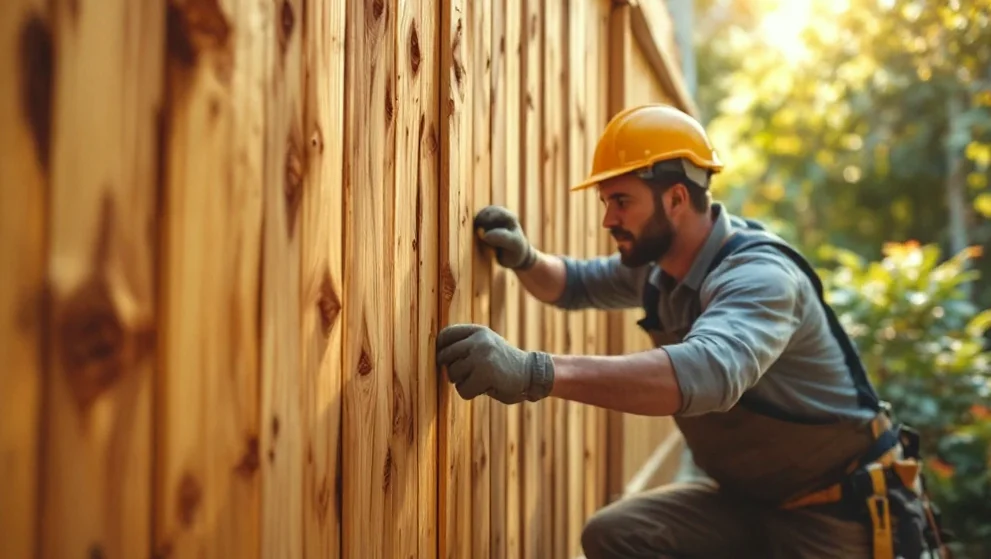
What is Wood Privacy Fence Installation and how does it work?
Wood privacy fence installation is the process of setting posts, attaching rails, and mounting pickets to create a solid, six-foot-tall barrier around your yard. In Huntsville, it typically costs $13 to $30 per foot for materials and labor, with most jobs landing between $25 and $60 per foot installed.
At its simplest, wood privacy fence installation means digging holes, setting posts in concrete, and building a frame of horizontal rails that you nail or screw pickets to. The pickets sit edge to edge, leaving no gaps, so neighbors can't see through. That's the 'privacy' part. A standard height is six feet, which matches most local ordinances for backyards.
The work starts with a site survey. We walk the property line, check for buried utilities, and confirm setback rules with the city. Huntsville requires a permit for most fences, and the inspector will want to see the posts set before the pickets go up. That's not a step to overlook; a fence that creeps onto a neighbor's lot can end up in court.
Once the line is marked, we dig holes about three feet deep, below the frost line. Each post gets set in concrete, which takes a day to cure before we attach the rails. Then we hang the pickets, leaving a small gap at the bottom for airflow and drainage. The whole process for a typical 150-foot fence takes two to three days, depending on the crew size and the ground conditions.
The cost for a six-foot wood privacy fence in Huntsville runs from $13 to $30 per linear foot, according to local fence cost data. (getfencefind.com) In Madison County, installed prices often land between $25 and $60 per foot, with most jobs at $30 to $45 per foot. (rocketcityfence.co) A typical 150-foot fence works out to around $3,188 installed. (getfencefind.com) That range depends on wood grade, terrain, and whether you add privacy slats, which run $3 to $5 per foot extra. (rocketcityfence.co)
- Posts set in concrete below the frost line
- Horizontal rails support the pickets
- Pickets installed edge to edge, no gaps
- Permit and inspections handled by the installer
Short version
- Wood privacy fences cost $13 to $30 per foot in Huntsville, but Madison County installs often run $30 to $45 per foot.
- A typical 150-foot fence takes 2 to 3 days to complete.
- Permits and utility locates are part of the process, not optional extras.
How Wood Privacy Fence Installation works, start to finish
The process begins with a property survey and permit, then moves to digging post holes, setting posts in concrete, and finishing with rails and pickets. Each step has a purpose, and missing one can cost you later.
First, we check the property line. We use a surveyor's report or the metal pins buried at the corners of your lot. If you don't have a survey, we can locate the pins, but sometimes they're buried under years of grass. That's a ten-minute fix with a metal detector, but it's a step we never miss. A fence that's six inches over the line is a headache you don't want.
Next comes the permit. Huntsville requires a fence permit for most residential properties. We pull it for you as part of the job. The fee is usually small, and it's included in our quote. The inspector will check the post spacing and depth before you cover the holes with pickets. That's a good thing; it catches mistakes while they're cheap to fix.
Then we call 811 to have utility lines marked. Gas, electric, water, and fiber optic lines run underground, and hitting one is not just expensive, it's dangerous. We wait the required time for the marks to be painted on the ground. If you're in a hurry, this is the part that can't be rushed.
With the line marked, we dig. Post holes are typically 10 to 12 inches in diameter and 30 to 36 inches deep, depending on the frost line and the height of the fence. We set each post in concrete, using a level to keep it plumb. The concrete needs a day to cure, so we usually set posts one day and come back the next to attach the rails.
Rails are the horizontal boards that connect the posts. For a six-foot fence, we use two or three rails, depending on the spacing and the wood grade. The rails get screwed or nailed to the posts, and then the pickets go on. We leave a small gap at the bottom, usually two to four inches, to keep the wood off the ground and allow water to drain. That gap also helps with airflow, which reduces rot.
Finally, we add the pickets. Each picket is nailed or screwed to the rails, with a consistent gap between them. For a true privacy fence, the pickets touch, but we still leave a tiny space for wood expansion. In Huntsville's humidity, wood swells and shrinks, so a tight fit in summer can buckle in winter.
The last step is a walkthrough. We check the gate swings, the latch works, and the fence is level. Then we clean up the debris and haul it away. Some outfits blow the sawdust into the yard and call it done; we load the truck and sweep the driveway.
The whole process, from the first dig to the final picket, takes about two days for a 150-foot fence. That's with a crew of two or three. If your yard has rocky soil or a steep slope, add a day. If you're in a hurry, we can work weekends, but the concrete still needs its cure time.
Costs vary with the wood grade. Pressure-treated pine is the most common, and it's what we recommend for most yards. Cedar costs more but resists rot and insects naturally. The price per foot you see online, $13 to $30 for Huntsville, (getfencefind.com) is for standard pine. Cedar runs higher, and a premium grade like redwood is higher still. Your quote will spell out the exact wood and the price per foot.
If you want extra privacy, you can add slats that fit between the pickets to block the small gaps. Those run $3 to $5 per foot extra. (rocketcityfence.co) They're a cheap upgrade if you have a neighbor who likes to peek through the cracks.
- Permit and utility locate before any digging
- Post holes 30 to 36 inches deep, set in concrete
- Rails attached after concrete cures
- Pickets installed with a small bottom gap for drainage
- Final walkthrough and debris removal
- Mark the property line.We locate survey pins or use your survey to set the exact boundary. This prevents disputes with neighbors.
- Pull the permit and call 811.Huntsville requires a permit, and utility locates keep you from hitting a gas line. We handle both.
- Dig and set posts.Holes go below the frost line, and each post is set in concrete. We wait a day for the concrete to cure.
- Attach rails and pickets.Rails go on first, then pickets. We leave a bottom gap for drainage and airflow.
- Final inspection and cleanup.We check the gate and level, then haul away all debris. You get a fence that's ready to use.
Why Wood Privacy Fence Installation matters for your home
A wood privacy fence does more than block sight lines; it defines your yard, keeps kids and pets in, and adds value to your property. Done right, it lasts 15 to 20 years with minimal upkeep.
In Huntsville, yards are part of daily life. A privacy fence turns a patch of grass into a backyard you can use without feeling like you're on stage. It blocks the view from the street and the neighbor's upstairs window. That's the obvious benefit, but there's more.
A fence keeps kids and pets contained. If you have a dog, you know the drill: a fence is not a luxury, it's a necessity. The same goes for a pool, which most cities require to be fenced. Huntsville's pool code is specific about height and gate latches, and a wood privacy fence meets those rules.
A well-built fence also adds value to your home. Agents will tell you that a fenced yard is a selling point, especially for families. It's one of those features that doesn't show up in the square footage but shows up in the offer price. A 150-foot wood fence installed for around $3,188 (getfencefind.com) can recoup a good chunk of its cost at resale.
Beyond that, a fence gives you a sound barrier. Wood absorbs more noise than chain link or vinyl, so a fence along a busy street can cut the traffic hum. It also blocks wind, which matters when a thunderstorm rolls through the Tennessee Valley.
But the value is in the installation quality. A fence is only as good as its posts. If the posts aren't set deep enough or the concrete isn't mixed right, the fence will lean within a couple of years. That's why we set posts below the frost line, which in Huntsville is about 12 to 18 inches, but we go deeper for stability. Freeze-thaw cycles can heave shallow posts out of the ground.
The wood you choose matters. Pressure-treated pine is the workhorse; it's affordable and resists rot. Cedar is naturally resistant to insects and looks better as it ages. Either way, a good installation will last 15 to 20 years, and a bad one won't last five. The difference is in the prep work, the curing time, and the fasteners. We use galvanized or stainless steel screws, not nails, because nails work loose over time.
For a Huntsville homeowner, the cost range is $13 to $30 per foot for the fence itself, (getfencefind.com) but installed prices in Madison County often run $30 to $45 per foot. (rocketcityfence.co) That gap is the difference between materials alone and a full install with permits, labor, and cleanup. The higher end of that range is what you should plan for, especially if your yard has slopes or rocky soil.
A wood privacy fence is worth it for most Huntsville homes. It adds privacy, safety, and resale value, and the cost is reasonable compared to other fencing materials.
Common problems and what causes them
Most fence problems trace back to poor post installation, bad wood selection, or maintenance that never happened. Leaning posts, rotting pickets, and sagging gates are the usual culprits, and each has a clear cause.
Leaning posts are the number one issue we see. They happen when the hole isn't deep enough or the concrete doesn't fully surround the post. In Huntsville's clay soil, water pools around shallow concrete, and freeze-thaw cycles push the post sideways. The fix is to dig deeper and use more concrete, which is why we go 30 inches or more.
Rot at the bottom of pickets is another common sight. It happens when the wood sits directly on the ground or in a puddle. That's why we leave a gap at the bottom. If you see rot starting, it's usually because the gap is too small or the yard drains poorly. You can fix drainage by grading the soil away from the fence, but you'll likely need to replace the affected pickets.
Sagging gates are a frequent complaint. A gate is a moving part, and it takes more stress than the rest of the fence. If the gate frame isn't braced diagonally, it will sag under its own weight. We always add a diagonal brace on the gate. If your gate sags, the fix is to add a brace or replace the gate entirely.
Another problem is wood warping. Pressure-treated pine can twist and cup as it dries, especially if it's not installed with the bark side facing out. We orient each picket so the curve works with the fence, not against it. If you see warped pickets, it's usually a sign of cheap wood or poor installation.
Fastener failure is less visible but just as important. Nails pop out over time, leaving pickets loose. We use screws, which hold better. If you hear a rattling fence in the wind, it's likely loose nails. You can replace them with screws, but it's a tedious job.
Finally, there's the issue of the fence being built too close to the ground. This traps moisture and speeds up rot. We keep a two to four inch gap, but if your yard is uneven, some sections may sit lower. That's a trade-off; you can't have a level top and a level bottom on a slope. We usually keep the top level and let the bottom follow the grade.
If you notice any of these issues, the sooner you address them, the cheaper the fix. A leaning post can be straightened if caught early, but a rotted post needs to be replaced. That's a bigger job, but we can do it without tearing down the whole fence.
The cost of repairs varies, but it's usually less than a full replacement. For a typical 150-foot fence, a full replacement runs around $3,188, (getfencefind.com) which is why it pays to maintain what you have. A coat of stain or sealant every few years will protect the wood and extend the life of your fence.
Minor cracks in pickets
Small cracks are normal as wood dries. If they're less than a quarter-inch wide, they're cosmetic. Keep an eye on them and seal the fence to prevent moisture from getting in.
Loose pickets or popping nails
If you can wiggle a picket by hand, the fasteners are failing. Replace nails with screws before the picket warps or falls off.
Leaning post or sagging gate
A leaning post is a structural problem. If it's more than a couple of degrees off, the fence is at risk. Call us to re-set the post before it pulls the whole section down.
Sources
Need fence installation in Huntsville? Get a free estimate today.
📞 256-695-4525