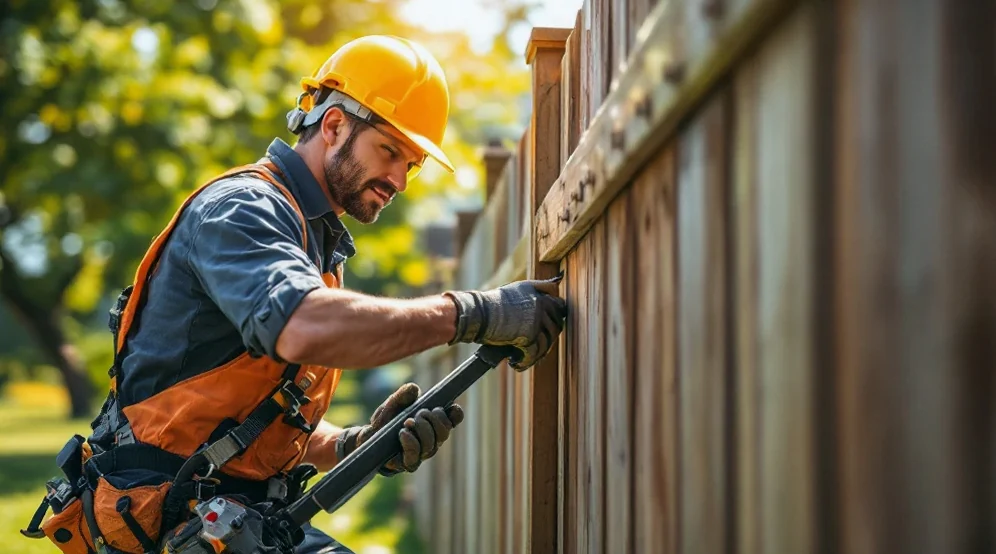
How does Fence Installation work?
We mark the property line, call 811 to have utilities flagged, then set posts in concrete below the frost line. Panels or pickets go up next, gates get hung and adjusted, and the crew cleans the site. Most residential yards in Huntsville finish in one to three days, weather permitting.
The part homeowners picture is the pickets going up. The part that decides whether the fence stays straight for fifteen years is everything before that: locating the line, checking for utilities, and digging holes deep enough that a wet February doesn't heave the posts. In Huntsville we deal with heavy clay in a lot of yards, and clay holds water. A post set too shallow in clay will lean within two seasons, no matter how good the wood is.
Cost lands somewhere between $1,275 and $7,650 for a typical residential job, depending on material, height, and how much fence you need. (getfencefind.com) That range is wide because a chain-link run around a small backyard and a six-foot cedar privacy fence around a half-acre are not the same project. Material drives most of the spread. Wood runs $18 to $32 per unit, vinyl $28 to $45, aluminum $30 to $52, and chain-link $12 to $22. (huntsvilleresidentialfencing.com)
Wood is the default here for a reason. It accounts for 42% of what gets installed, vinyl 28%, aluminum 14%, and chain-link 10%. (huntsvilleresidentialfencing.com) Cedar and pressure-treated pine handle our humidity fine if the posts are set right and the bottom rail sits off the dirt. Vinyl holds up to sun and rain with almost no maintenance, which is why it keeps gaining ground in newer subdivisions off Zierdt Road and in the Hampton Cove area.
One thing that surprises people: the fence you see in a neighbor's yard is rarely a straight copy of what will work in yours. Slope, root systems, drainage swales, and where the HOA wants the fence line all change the plan. We walk the yard before we quote, because a fence that looks simple from the street can have three mature pines sitting exactly where the posts need to go.
Short version
- We mark the line, call 811, and set posts in concrete below the frost line.
- Panels, pickets, and gates go up after posts cure, usually the same visit or the next day.
- Most Huntsville yards finish in one to three days.
- Typical cost runs $1,275 to $7,650 depending on material, height, and yard size. (getfencefind.com)
What to expect, start to finish
<p>Installation runs in a fixed order: walk and measure, mark utilities, dig and set posts, hang panels and gates, then clean up. Fences that fail early usually had one of those steps cut short. Here is the sequence we follow on every job.</p>
It starts with a walk of the property. We measure the run, check the corners, look at slope, and note anything that will slow the dig: tree roots, an old concrete pad, a sprinkler line, a gas meter. If you have a survey, we want to see it. If you don't, we go off the plat and the visible markers, and we tell you where the line is uncertain so you can decide before we dig. Fence disputes with neighbors are expensive and avoidable.
- Have your survey handy if you have one. It saves an argument later.
- Move cars out of the driveway the morning of the dig.
- Mark your sprinkler heads and invisible fence wire with flags or paint.
- Lock up pets. A gate left open during install is how dogs get out.
- Expect noise. Augers and nail guns are loud, and the crew starts early to beat the heat.
- Walk and measure.We measure the full run, check slope and corners, and flag roots, concrete, sprinkler lines, and meters. That is where the quote gets its number.
- Call 811.Alabama law requires utilities to be located before anyone digs. We call, wait for the flags and paint, and only then break ground. Digging into a gas or fiber line is a bad day for everyone.
- Set the posts.Holes get dug below the frost line, posts go in, and concrete gets poured and crowned so water sheds away from the post. This is the step that decides how long the fence lasts.
- Hang panels and gates.Rails, pickets or panels, then gates. Gates get hung last and adjusted for swing and latch, because a gate hung before the posts cure will sag.
- Clean up.We haul off dirt, concrete bags, and cutoffs, and rake the disturbed ground. You should not be left with a debris pile to deal with.
How long does Fence Installation take?
Most Huntsville residential fences go up in one to three days. A short chain-link run can finish in a single day. A long privacy fence with several gates, root-heavy ground, or a slope that needs stepping can stretch to three or four days. Weather is the biggest variable.
Post setting is the slow part. Digging in Huntsville clay with an auger is one thing; hitting a root ball from a mature oak is another. We have pulled out roots the size of a forearm on lots in Blossomwood and Five Points, and that adds hours. A yard with clean, root-free soil moves fast. A yard full of old stumps and buried concrete does not.
Concrete needs time to cure before the fence carries load. In summer heat, posts set in the morning are usually ready for panels the same day or the next. In a cool, wet stretch, we may wait a day. That wait is not us being slow. Hanging rails on green concrete is how you get a wavy fence.
Gates take longer than people expect. A gate has to swing true, latch clean, and not drag after the first rain. We hang gates last and adjust them twice: once at install and once after the posts have fully cured. If you have a double gate for a boat or trailer, budget extra time for the drop rod and the bracing.
Rain is the wild card. We will not dig in standing water, and we will not pour concrete in a downpour. A week of afternoon thunderstorms in July can push a two-day job to four. We watch the radar and tell you the night before if the schedule is moving.
Day 1
Walk, mark, 811 clearance, and post holes. On a simple run, posts get set and concrete poured.
Day 2
Rails and pickets or panels go up. This is the day the yard changes shape.
Day 3
Gates hung and adjusted, cleanup, final walk with you. Longer or root-heavy jobs may run into day four.
Picking a material before the crew shows up
Material choice drives both the price and how the install day goes. Wood installs fast and can be stained any color. Vinyl and aluminum come in panels that go up quickly but cost more per foot. Chain-link is the cheapest and the fastest to install.
Wood gives you the most flexibility. You can run it six feet for privacy, four feet for a garden border, or a mix. It takes stain and paint, so you can match a house color. It also needs the most attention: a cedar fence in Huntsville will want a fresh coat of sealer every few years to keep from graying and checking. That is a homeowner task, not an install task, but it is part of owning wood.
Vinyl costs more up front, $28 to $45 per unit, and it goes up in panels that click together. (huntsvilleresidentialfencing.com) The upside is that you never stain it, never seal it, and never replace a picket because a string trimmer chewed it up. In neighborhoods with strict HOA rules, vinyl in a standard color is often the path of least resistance.
Aluminum runs $30 to $52 per unit and is the pick for pool enclosures and front-yard decorative fencing. (huntsvilleresidentialfencing.com) It is powder-coated, so it holds color, and it does not rot. It is not a privacy fence. If you want to block sight lines, aluminum is the wrong tool.
Chain-link at $12 to $22 per unit is the budget option and the fastest install. (huntsvilleresidentialfencing.com) It is what most people put around a dog run or a back lot line. It will not win a curb-appeal contest, but it does the job and it lasts.
Worth it when
- You want privacy and you plan to stay in the house long enough to enjoy it.
- You have a dog and need a secure, tall run.
- You want to match an existing fence or an HOA color palette.
Hold off when
- You are selling within a year and the fence will not change the sale price.
- Property line is disputed or unsurveyed.
- You are still deciding between a fence and a privacy hedge.
What install day looks like
The crew arrives early, usually by 7 or 7:30, to beat the afternoon heat. You will hear an auger, a nail gun, and a lot of walking. Expect the yard to look torn up mid-day and put back together by the time we leave.
We stage materials near the fence line, not in your driveway if we can help it. On a tight lot, though, the truck has to park on the street and we carry panels by hand. That is slower, and it is one reason a cramped cul-de-sac lot can take longer than a wide-open one.
The dirt that comes out of the post holes has to go somewhere. We pile it, then spread it back along the fence line and rake it. If you want that dirt hauled off, say so before the job, because it changes the plan and the price. Some crews leave the pile and call it done. We don't.
You will want to be home for the final walk. That is when we point out the gate latches, the post caps, and anything we noticed during the dig that you should know about: a soft spot in the soil, a sprinkler line we nicked, a root we cut. Better you hear it from us than find it in six months.
One more thing: your neighbors. A fence goes on the line, and the line touches their yard too. We knock on doors before we start when the fence runs close to a neighbor's property. It heads off ninety percent of the complaints. If your HOA requires approval, get it in writing before we order materials, because a stop-work order mid-job is an expensive mess.
Soft ground
If the auger pulls up wet, spongy soil, posts may need deeper holes or wider concrete collars. We flag it and adjust.
Roots in the line
A big root in a post hole means either shifting the post a few inches or cutting the root. Both have trade-offs, and we tell you which one we recommend.
Unmarked utilities
If 811 flags a line running through the fence path, we stop and re-route. Never dig through a flag.
What homeowners get wrong about fence installation
The most common mistake is treating the fence as a product instead of a build. The posts, the depth, and the concrete are what make a fence last. Homeowners who focus only on picket style and color end up with a fence that leans in three years.
Setting posts too shallow is the number one failure we see on fences we did not install. A post that is two feet deep in Huntsville clay will move. We go deeper, and we crown the concrete so water runs off instead of pooling at the base of the post. That single detail is the difference between a fence that lasts ten years and one that lasts twenty.
Another one: no gap at the bottom. A fence that sits flush to the ground traps moisture and rots the bottom rail. We leave a small gap, usually a couple of inches, so air moves and water drains. It also keeps the pickets from wicking up water from wet grass.
People also underestimate gates. A gate is the most-used part of the fence and the first thing to fail. Bracing matters. A gate with a proper diagonal brace and a good latch will hold up. A gate built like a panel will sag within a year.
And finally, the property line. We have seen homeowners install a fence two feet onto a neighbor's lot because they eyeballed the line. That is a survey problem, not a fence problem, but it becomes a fence problem fast. If the line is at all unclear, get a survey before you dig.
A fence is only as good as the posts under it. Everything above ground is cosmetic.
What it costs and what moves the number
Typical Huntsville fence installation runs $1,275 to $7,650. (getfencefind.com) Material, height, yard size, and site conditions move the price most. The only way to get an exact number is a walk of your yard.
Material is the biggest lever. Chain-link at $12 to $22 per unit is the low end. (huntsvilleresidentialfencing.com) Wood at $18 to $32 sits in the middle. (huntsvilleresidentialfencing.com) Vinyl at $28 to $45 and aluminum at $30 to $52 are the high end. (huntsvilleresidentialfencing.com) A 150-foot wood privacy fence and a 150-foot aluminum fence are not close in price.
Height matters. A four-foot fence uses less material and shorter posts than a six-foot fence. If you want a six-foot privacy fence, expect the number to sit toward the upper end of the range.
Site conditions can add cost. Rocky ground, heavy roots, a slope that needs stepped panels, or a gate that has to be custom-built all add labor. A yard with easy access and clean soil sits at the low end. A yard with a narrow side gate and three stumps in the line sits at the high end.
We quote after we walk the yard, not over the phone. A phone quote is a guess, and guesses turn into change orders. If a company gives you a firm number without seeing the property, ask what happens when they hit a root.
Frequently Asked Questions
Do I need a permit to install a fence in Huntsville?
It depends on height and location. Many residential fences under six feet in a rear yard do not need a city permit, but HOAs and some subdivisions have their own rules. We check the requirements for your address before we order materials, and we tell you what paperwork you need. If a permit is required, we do not start until it is in hand.
How deep do you set fence posts?
We go below the frost line, which in this part of Alabama is around 12 inches, and we usually set posts 24 to 36 inches deep depending on height and soil. Posts carry the load, so depth matters more than anything above ground. We crown the concrete at the top so water sheds away from the post instead of sitting on it.
Can you install a fence on a slope?
Yes. Sloped yards get either stepped panels, where each section is level and steps down, or a racked fence that follows the grade. Stepped looks cleaner on steep grades and is what most homeowners want. Racked works on gentle slopes. We look at the grade during the walk and tell you which one your yard needs.
What happens if you hit a utility line?
We call 811 before we dig, and utilities mark their lines. If a marked line runs through the fence path, we re-route the fence or adjust the post spacing. We do not dig through a flag. If we hit an unmarked line, we stop, call the utility, and deal with it before continuing.
How long before I can use the gate?
Usually the same day, once the concrete has set enough to hold the post. We hang gates last and adjust them after the posts cure, so the swing and latch are right. If you have a heavy double gate, we may ask you to wait a day before regular use so the concrete is fully set.
Do you haul away the old fence?
Yes, if you want us to. Tear-out and disposal is a separate line on the quote. Some homeowners want to keep the old panels for firewood or projects. Tell us before the job so we plan the truck space and the dump fee.
Will the fence damage my lawn?
There will be some disturbance along the fence line from digging and foot traffic. We rake and reseed where we can, and the grass usually comes back within a season. If you have a sprinkler system, mark the heads and lines before we start so we can avoid them.
How soon can you start?
It depends on the season. Spring and early summer are our busiest stretch, and the schedule can run a few weeks out. Late fall and winter open up. Once we have a signed quote and any HOA approval, we put you on the schedule and give you a start window.
What kind of fence is best for a dog?
A six-foot wood or vinyl privacy fence is the usual pick. It blocks sight lines, which cuts down on barking at things the dog can see. Chain-link works and costs less, but dogs can see through it and some will test it. Whatever you choose, make sure the gate latches are dog-proof and the bottom gap is small enough that a determined dog cannot dig out.
Do you offer financing?
Financing options exist for larger fence projects, and we can walk you through what is available. The cost range for a typical Huntsville install is $1,275 to $7,650, so a payment plan can make sense on the higher end. (getfencefind.com) Ask us when we quote.
Sources
Need fence installation in Huntsville? Get a free estimate today.
📞 256-695-4525